 PocketOption
Trading Assets Pocket Option — 100+ instruments for trading
Currency pairs, cryptocurrencies, stocks, commodities, and stock indices. A complete catalog with payouts, trading session schedules, and asset selection recommendations.
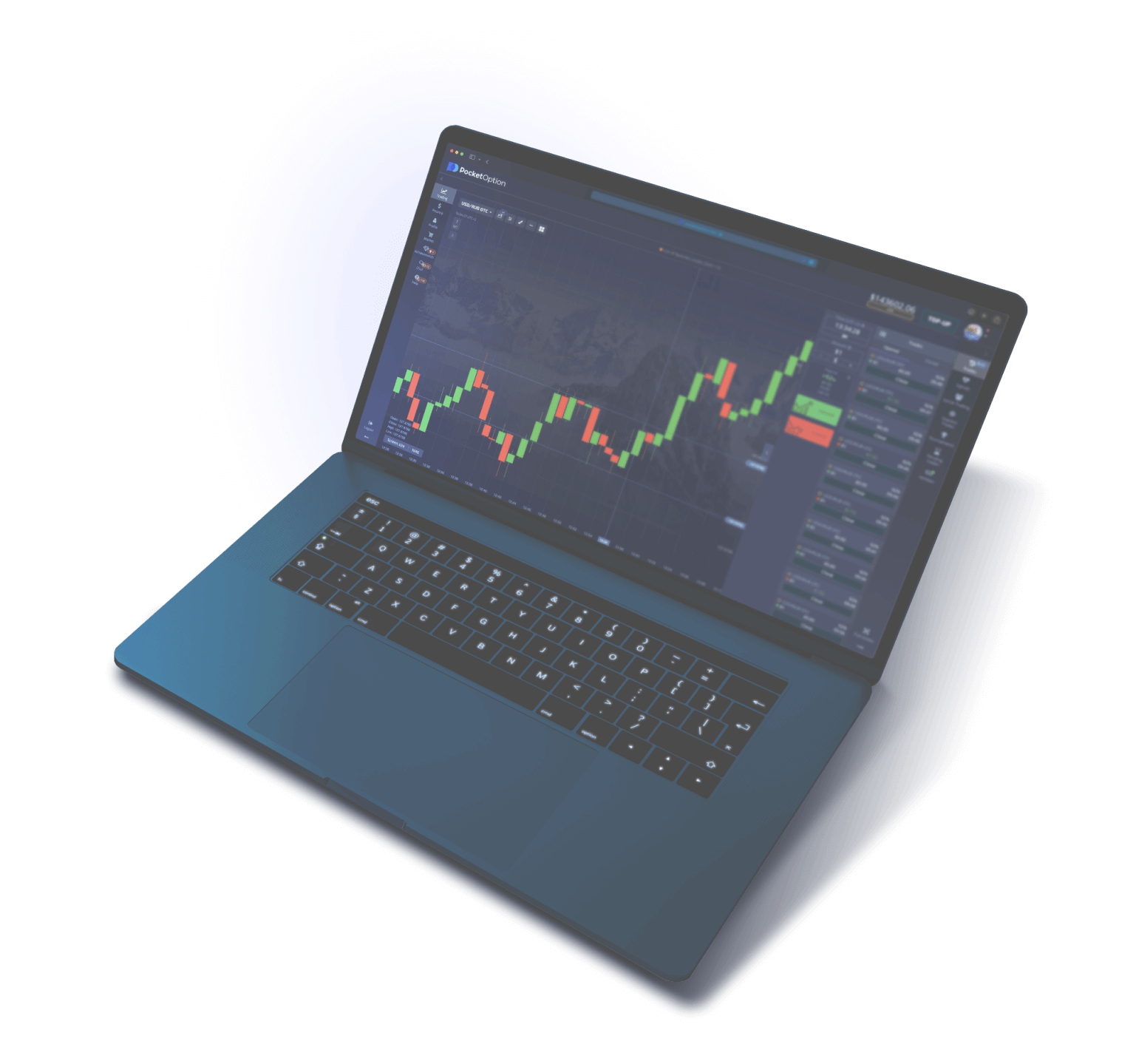
Pocket Option Trading Assets Overview
Pocket Option gives traders access to over 100 trading instruments across five main categories. Each category has its own characteristics: varying volatility levels, trading hours, payout sizes, and pricing factors. Understanding the asset catalog structure is the first step toward making informed instrument selections and building an effective trading strategy.
The platform regularly updates its list of available assets. New instruments are added as infrastructure expands and demand grows within the trading community. Over the past year, the catalog has been expanded with several cryptocurrency pairs and tech company stocks, broadening portfolio diversification options. All assets are available on both live and demo accounts under identical trading conditions.
The payout size (profit percentage on a successful trade) varies depending on the specific asset, time of day, and current market conditions. Base payouts on popular currency pairs range from 80–92%, while cryptocurrencies and OTC assets can yield up to 218%. Pocket Option displays the current payout percentage directly in the trading terminal next to each instrument, making it easy to identify the most favorable assets at any given moment.
Five Categories of Trading Assets
All instruments on the platform are grouped by underlying asset type. Each category differs in the nature of price movements, sensitivity to macroeconomic factors, and optimal trading times. Below is a summary table with the key parameters for each group.
| Category | Count | Example Instruments | Max Payout | Trading Hours |
|---|---|---|---|---|
| Currency Pairs (Forex) | 30+ | EUR/USD, GBP/JPY, USD/CHF | 92% | Mon–Fri, 24 hours |
| Cryptocurrencies | 20+ | BTC/USD, ETH/USD, SOL/USD | 218% | 24/7, including weekends |
| Stocks | 25+ | Apple, Tesla, Amazon, Google | 90% | Mon–Fri, by session |
| Commodities & Raw Materials | 8+ | Gold, Silver, Brent Crude Oil | 90% | Mon–Fri, by session |
| Stock Indices | 10+ | S&P 500, NASDAQ, DAX 40 | 85% | Mon–Fri, by session |
Currency pairs are the most popular among traders, accounting for roughly 60% of all trades on the platform. Cryptocurrencies come in second thanks to their round-the-clock availability and high payouts. Stocks and commodities attract traders who prefer fundamental analysis and sector-specific exposure. Stock indices are used for trading macroeconomic events and portfolio diversification.
How Assets Are Displayed in the Terminal
In the Pocket Option trading terminal, assets are located in the left sidebar and grouped by category. Each instrument displays: the current price, change over the last period, payout percentage, and an availability indicator (active or trading session closed). Traders can add frequently used assets to the «Favorites» section for quick access — the star icon next to the instrument name activates this feature.
Assets can be searched by name or ticker. Simply start typing in the search bar — for example, «EUR» for euro currency pairs or «Apple» for company stocks — and the system will filter matching results. This is especially convenient when working with a large number of instruments, where scrolling through the entire catalog takes time.
Tip: The payout percentage for the same asset can vary depending on the time of day and the selected expiration. Always check the current payout in the terminal before opening a trade — it is displayed directly next to the «Higher» and «Lower» buttons.
Currency Pairs (Forex) — 30+ instruments
Currency pairs form the foundation of Pocket Option's trading asset catalog and represent the most liquid category of instruments. The Forex market is the world's largest financial market, with a daily turnover exceeding $7.5 trillion. The platform offers more than 30 currency pairs across three subcategories: major pairs, cross rates, and exotic pairs.
Major pairs include the US dollar as one of the currencies and are characterized by the highest liquidity and tightest spreads. EUR/USD, GBP/USD, USD/JPY, and USD/CHF are the four primary major pairs, accounting for more than 70% of total trading volume on the Forex market. For binary options, high liquidity means predictable price movement and stable payout percentages.
Cross rates are currency pairs that do not include the US dollar. These include EUR/GBP, EUR/JPY, GBP/JPY, AUD/NZD and other combinations. Cross rates exhibit higher volatility compared to majors, which creates both additional profit opportunities and increased risks. Cross rates are especially active at the intersection of trading sessions — for example, EUR/JPY shows peak volatility during the overlap of the European and Asian sessions.
Exotic pairs combine one of the major world currencies with a currency from an emerging market: USD/TRY (dollar/Turkish lira), USD/ZAR (dollar/South African rand), EUR/PLN (euro/Polish zloty). Exotic pairs are characterized by high volatility and wider spreads, but offer higher payouts on the Pocket Option platform — up to 92% on select instruments.
TOP-10 Currency Pairs by Popularity and Payouts
Below is a table of the ten most traded currency pairs on Pocket Option. Payout data is current as of March 2026 and may vary slightly depending on the time of day, expiration, and market conditions.
| Pair | Type | Payout (base) | Volatility | Best Trading Time |
|---|---|---|---|---|
| EUR/USD | Major | 82-92% | Medium | 10:00-18:00 MSK |
| GBP/USD | Major | 80-90% | High | 11:00-19:00 MSK |
| USD/JPY | Major | 80-90% | Medium | 03:00-09:00 MSK |
| GBP/JPY | Cross Rate | 78-88% | Very High | 11:00-16:00 MSK |
| EUR/GBP | Cross Rate | 78-87% | Low | 11:00-17:00 MSK |
| AUD/USD | Major | 80-88% | Medium | 02:00-08:00 MSK |
| USD/CAD | Major | 80-88% | Medium | 16:00-22:00 MSK |
| USD/CHF | Major | 80-90% | Low | 10:00-18:00 MSK |
| EUR/JPY | Cross rate | 78-88% | High | 10:00-16:00 MSK |
| NZD/USD | Major | 78-86% | Medium | 01:00-07:00 MSK |
Forex Trading Sessions
The currency market operates around the clock from Monday to Friday, thanks to the sequential opening of trading sessions across different time zones. Each session has its own characteristics that affect the volatility and liquidity of specific currency pairs. Understanding the session schedule allows traders to choose the optimal time to trade a particular instrument.
The Asian session (Tokyo) opens at 02:00 MSK and is characterized by moderate volatility. The main price movements are observed in yen pairs: USD/JPY, EUR/JPY, GBP/JPY. The European session (London) starts at 10:00 MSK and is the most active — it accounts for approximately 35% of total daily trading volume. Euro and British pound pairs show maximum volatility during this period. The American session (New York) begins at 16:00 MSK and overlaps with the European session until 19:00 — this is the period of peak market liquidity.
The highest volatility occurs at session overlaps: the European-Asian overlap (10:00-11:00 MSK) and the European-American overlap (16:00-19:00 MSK). During these periods, the maximum number of market participants are active, generating strong price impulses. For traders using short-term expirations (30 seconds — 5 minutes), session overlaps offer the greatest number of trading opportunities.
What Drives Currency Pair Rates
Forex pricing is determined by a combination of macroeconomic, geopolitical, and market factors. The key drivers of currency rate movements include central bank interest rate decisions, economic data releases (GDP, inflation, unemployment, trade balance), geopolitical events, and shifts in monetary policy.
- Interest rates: a central bank rate hike strengthens the national currency, while a cut weakens it. Decisions by the US Federal Reserve, ECB, Bank of England, and Bank of Japan have the greatest impact on major pairs.
- Economic data: GDP, inflation (CPI), employment (NFP), and industrial production figures are released on a set schedule and trigger sharp price movements at the time of publication.
- Geopolitics: armed conflicts, trade wars, sanctions, and political crises increase volatility and create long-term trends in the currency market.
- Market sentiment: expectations of major players, hedge fund positioning, and capital flows between regions shape medium-term trends in currency pairs.
Tip: Use an economic calendar to track upcoming data releases. During high-impact news events (NFP, rate decisions), volatility spikes sharply — beginner traders are advised to avoid placing trades 15 minutes before and after the release.
Currency Pair Trading Strategies on Pocket Option
Classic technical analysis methods apply to trading currency pairs on the platform. Moving averages (SMA, EMA) help identify trend direction: if the price is above the 50-period moving average, the trend is bullish; if below, it is bearish. The RSI (Relative Strength Index) signals overbought conditions (value above 70) and oversold conditions (below 30), indicating a likely reversal.
Support and resistance levels are another powerful tool when trading Forex on Pocket Option. A currency pair's price often bounces off historical levels, forming predictable patterns. As price approaches a support level, a trader opens a «Higher» trade; as it approaches resistance — a «Lower» trade. Combining levels with indicators (RSI, Bollinger Bands) improves forecast accuracy and reduces the number of false signals.
Candlestick analysis is especially effective on higher timeframes (M5, M15) when trading major pairs. Engulfing, pin bar, and doji patterns at support and resistance levels generate reliable entry signals. On Pocket Option, all the necessary charting tools are available in the terminal: over 50 indicators, line drawing tools, Fibonacci, and trend channels.
Cryptocurrencies — 20+ digital assets with payouts up to 218%
Crypto assets hold a special place in the Pocket Option catalog thanks to two key advantages: round-the-clock availability with no days off and the highest payouts on the platform, reaching 218% on select expirations. The platform offers more than 20 cryptocurrency pairs, including the largest coins by market cap and promising altcoins.
Unlike traditional financial instruments, the crypto market is not tied to trading sessions. Bitcoin, Ethereum and other digital assets trade continuously — 24 hours a day, 7 days a week, 365 days a year. This makes cryptocurrencies the only asset category on Pocket Option available on weekends and holidays, when other markets are closed.
Crypto volatility significantly exceeds that of currency pairs and stocks. Bitcoin's daily swings average 2-5%, while altcoins (Solana, Dogecoin, Avalanche) can move 5-15% in a single trading day. High volatility creates favorable conditions for short-term binary options trading, but demands greater attention to risk management and expiration selection.
Cryptocurrency asset catalog
Pocket Option offers cryptocurrency trading in pairs with the US dollar. Each instrument has its own volatility profile and payout level. The table below shows the main cryptocurrency pairs with current parameters.
| Cryptocurrency | Pair | Payout | Volatility | Market Cap (rank) |
|---|---|---|---|---|
| Bitcoin | BTC/USD | 85-218% | High | #1 |
| Ethereum | ETH/USD | 82-200% | High | #2 |
| Litecoin | LTC/USD | 80-180% | High | TOP-20 |
| Ripple | XRP/USD | 80-175% | Very High | TOP-10 |
| Solana | SOL/USD | 80-190% | Very High | TOP-10 |
| Cardano | ADA/USD | 78-170% | High | TOP-15 |
| Dogecoin | DOGE/USD | 78-185% | Very High | TOP-10 |
| Polkadot | DOT/USD | 78-165% | High | TOP-20 |
| Avalanche | AVAX/USD | 78-175% | Very High | TOP-15 |
| Binance Coin | BNB/USD | 80-180% | High | TOP-5 |
Why Crypto Payouts Are Higher
Higher payouts on cryptocurrency assets are driven by the nature of their pricing. The crypto market is less predictable than Forex due to fewer institutional participants, the absence of central bank regulatory mechanisms, and sensitivity to news flow (regulatory statements, exchange listings, hacking incidents). The broker compensates for this increased uncertainty with higher payouts, attracting traders to this asset class.
Maximum Payouts of up to 218% are available on special expirations — typically short-term trades lasting 5-15 seconds during peak volatility periods. On standard expirations (1-5 minutes), crypto payouts range from 80-95%, which is still above the average for other asset categories. The exact percentage depends on the specific asset and current market conditions.
Cryptocurrency Pricing Factors
Cryptocurrency prices are shaped by a unique set of factors that differ significantly from traditional financial instruments. Understanding these drivers allows for more accurate forecasting when trading binary options on digital assets.
- Regulatory decisions: statements from the SEC, ECB, and other regulators on the status of cryptocurrencies, approval or rejection of Bitcoin and Ethereum ETFs, introduction of taxes or bans in specific jurisdictions
- Bitcoin Halving: the programmatic reduction of block mining rewards by half (most recent — April 2024), which has historically preceded significant BTC price increases over 12-18 months
- Institutional adoption: purchases by major corporations (MicroStrategy, Tesla), launch of crypto products by traditional financial institutions (BlackRock, Fidelity)
- Network activity: transaction count, unique addresses, staking volume, and TVL (Total Value Locked) in DeFi protocols
- Social media: posts from influential figures (Elon Musk, Vitalik Buterin), viral trends, and meme coin seasons can trigger sharp short-term price movements
Warning: Cryptocurrencies are subject to sudden sharp price movements. Flash crashes (an instant drop of 10-20% within minutes) and pump-and-dump schemes (artificial price inflation) are real phenomena in the crypto market. Do not risk more than 2-3% of your trading deposit on a single trade, and always apply risk management.
Technical Analysis of Cryptocurrencies
The cryptocurrency market responds well to technical analysis on medium and short-term timeframes. Bitcoin sets the overall direction for the entire crypto sector — BTC correlation with altcoins ranges from 0.70-0.90 during strong trends. When Bitcoin rises, most altcoins follow with greater amplitude (the «altcoin season» effect). When BTC falls, altcoins tend to lose even more in percentage terms.
For trading cryptocurrencies on Pocket Option, it is recommended to use the Bollinger Bands indicator in combination with volume. When the price touches the lower Bollinger Band and trading volume is declining, a buy signal is formed (a «Higher» trade). When the price reaches the upper band with increasing volume — a sell signal. Expirations of 5-15 minutes are optimal for this strategy on crypto pairs, as they provide sufficient time for the price impulse to play out.
Stocks — 25+ Companies from Global Industry Leaders
Pocket Option offers binary options trading on stocks of the world's largest companies. The catalog features over 25 issuers, primarily from the technology, financial, and consumer sectors. Stocks are quoted in US dollars and are available during the trading hours of the respective stock exchanges — NYSE and NASDAQ for American companies, LSE for British, XETRA for German.
Trading stocks through binary options differs from traditional investing. The trader does not acquire a stake in the company, but rather predicts the direction of price movement over a given period. This makes it possible to profit from both rising and falling prices — all you need to do is correctly identify the direction. The minimum trade is $1, making stock trading accessible at any deposit size.
Stock pricing is driven by a company's financial results (quarterly earnings reports), sector trends, the overall state of the stock market, and macroeconomic factors. Earnings season — the period of maximum volatility for individual stocks — is when the release of financial results can trigger price moves of 5–15% within just a few hours.
Available Stocks Catalog
| Company | Ticker | Sector | Exchange | Payout |
|---|---|---|---|---|
| Apple | AAPL | Technology | NASDAQ | 80-90% |
| Tesla | TSLA | Automotive / Technology | NASDAQ | 78-88% |
| Amazon | AMZN | E-commerce / Cloud | NASDAQ | 80-90% |
| Alphabet (Google) | GOOGL | Technology / Advertising | NASDAQ | 80-88% |
| Microsoft | MSFT | Technology / Cloud | NASDAQ | 80-90% |
| Meta (Facebook) | META | Social Media | NASDAQ | 78-88% |
| NVIDIA | NVDA | Semiconductors / AI | NASDAQ | 78-88% |
| Netflix | NFLX | Streaming | NASDAQ | 78-86% |
| JPMorgan Chase | JPM | Finance | NYSE | 78-86% |
| Boeing | BA | Aerospace | NYSE | 78-85% |
| Coca-Cola | KO | Consumer Staples | NYSE | 78-85% |
| McDonald's | MCD | Restaurant / Food Service | NYSE | 78-85% |
Trading Hours for Stocks
Stocks are available for trading only during the operating hours of their respective stock exchanges. This is a key difference from currency pairs and cryptocurrencies, which trade around the clock. Outside of exchange hours, stocks on the platform display a "Market Closed" status and are unavailable for opening trades.
- NASDAQ / NYSE (USA): 16:30-23:00 Moscow time (Monday-Friday). Pre-market from 15:00 MSK, post-market until 01:00 MSK — these periods may not be displayed on the platform.
- LSE (United Kingdom): 11:00-19:30 Moscow time (Monday-Friday).
- XETRA (Germany): 11:00-19:30 Moscow time (Monday-Friday).
On national holidays, the respective exchanges are closed and their associated stocks are unavailable for trading. Key non-trading days include: Christmas (December 25), Thanksgiving (fourth Thursday of November, USA), Labor Day (first Monday of September, USA), and New Year's Day (January 1). Exchanges often close early on the days preceding holidays.
Tip: The highest stock volatility occurs in the first 30-60 minutes after the exchange opens (16:30-17:30 MSK for US stocks). This period is well-suited for short-term trades with expiration times of 1-5 minutes. Trading tends to be calmer during the middle of the session (18:00-21:00 MSK).
How to Analyze Stocks for Binary Options
Analyzing stocks for trading on Pocket Option combines elements of both fundamental and technical approaches. Fundamental analysis involves reviewing quarterly financial reports (revenue, EPS, guidance), industry trends, and a company's competitive position. Ahead of earnings season (January, April, July, October), analyst consensus forecasts are published — if actual results beat expectations, the stock rises; if they fall short, it drops. This pattern creates predictable price movements on earnings release days.
Technical analysis of stocks on the platform follows the same principles as for currency pairs, but accounts for stock market specifics. Stocks tend to form gaps (price gaps) at the open — the difference between the previous day's closing price and the current day's opening price. Gaps often "fill" during the trading session, creating a trading opportunity: if a stock opens significantly above its close (gap up), a downward correction is likely, and vice versa.
Sector analysis helps identify leaders and laggards within an industry. If the technology sector is broadly rising (NASDAQ 100 hitting new highs), sector leaders (Apple, Microsoft, NVIDIA) are likely to continue their upward trend. During a sector correction, stocks of overvalued companies tend to fall first, while defensive names (Coca-Cola, McDonald's) show resilience. Understanding these relationships improves the quality of trading decisions.
Commodities — Gold, Silver, Oil, and Natural Gas
The commodities category on Pocket Option includes precious metals, energy resources, and agricultural goods. This is one of the oldest categories of financial instruments, traded on global exchanges for centuries. For binary options traders, commodities are attractive due to their pronounced trending movements, reactions to geopolitical events, and relative predictability based on fundamental analysis.
Gold (XAU/USD) is the most popular commodity asset on the platform. Historically, gold is considered a «safe haven» — an asset into which investors move capital during periods of economic instability, geopolitical crises, and rising inflation. This is why the price of gold often rises when stock markets fall, and vice versa. This inverse correlation with risk assets makes gold a convenient hedging instrument.
Oil (Brent and WTI) is the second most significant commodity asset. Oil prices are determined by the balance of supply and demand in the global market, OPEC+ production decisions, the geopolitical situation in the Middle East, and the economic growth rates of major consumers (China, the US, India). Oil prices influence the currencies of oil-producing nations (RUB, CAD, NOK), creating additional opportunities for cross-analysis.
Commodity Assets Catalog
| Asset | Symbol | Payout | Volatility | Key Drivers |
|---|---|---|---|---|
| Gold | XAU/USD | 80-90% | Medium | Inflation, Fed, geopolitics |
| Silver | XAG/USD | 78-88% | High | Industrial demand, gold |
| Brent Crude | BRENT | 78-88% | High | OPEC+, inventories, geopolitics |
| WTI Crude | WTI | 78-88% | High | US inventories, production, OPEC+ |
| Natural Gas | NATGAS | 75-85% | Very High | Seasonality, weather, storage |
| Platinum | XPT/USD | 75-85% | Medium | Auto industry, jewelry |
| Palladium | XPD/USD | 75-83% | High | Auto catalysts, supply deficit |
| Copper | COPPER | 75-83% | Medium | Construction, China |
Trading Specifics for Commodities
Commodity markets exhibit pronounced seasonality. Natural gas prices rise in winter months (heating season in the Northern Hemisphere) and fall in summer. Oil sees increased demand during the driving season (May–September in the US). Gold historically shows strong moves in the first and fourth quarters, when institutional buyers and the jewelry industry become more active (wedding season in India, holiday purchasing).
The economic calendar is especially important for trading commodities. Weekly US oil inventory reports (Wednesday, 17:30 MSK) and natural gas storage data (Thursday, 17:30 MSK) trigger an immediate price reaction. CPI releases directly impact gold: rising inflation pushes the price up, falling inflation pushes it down. OPEC+ production volume decisions are a key event for oil quotes and are announced at the alliance's regular meetings.
Tip: Gold and silver are strongly correlated with each other (correlation coefficient above 0.85). If you see a strong move in gold, silver will very likely follow in the same direction — but with greater amplitude. Use this relationship to confirm trading signals.
Stock Indices — S&P 500, NASDAQ, DAX and others
Stock indices reflect the collective performance of a group of stocks representing a specific economic sector or national stock market. Trading indices on Pocket Option allows you to work with broad market dynamics without picking individual companies. This simplifies the analytical process: instead of studying a specific issuer's financial reports, the trader assesses the overall state of the economy and market sentiment.
The platform offers more than 10 stock indices covering the world's largest economies: the US (S&P 500, NASDAQ 100, Dow Jones), Europe (DAX 40, FTSE 100, CAC 40), and Asia (Nikkei 225, Hang Seng). Each index is calculated using its own methodology — market-cap weighting (S&P 500), price weighting (Dow Jones), or equal weighting.
Key indices on the platform
| Index | Country | Composition | Payout | Trading Hours (MSK) |
|---|---|---|---|---|
| S&P 500 | USA | 500 largest companies | 78-85% | 16:30-23:00 |
| NASDAQ 100 | USA | 100 technology companies | 78-85% | 16:30-23:00 |
| Dow Jones 30 | USA | 30 industrial giants | 78-84% | 16:30-23:00 |
| DAX 40 | Germany | 40 companies on the Frankfurt Stock Exchange | 78-85% | 11:00-19:30 |
| FTSE 100 | United Kingdom | 100 companies on the London Stock Exchange | 76-83% | 11:00-19:30 |
| CAC 40 | France | 40 companies on the Paris Stock Exchange | 76-83% | 11:00-19:30 |
| Nikkei 225 | Japan | 225 companies on the Tokyo Stock Exchange | 76-83% | 03:00-09:00 |
| Hang Seng | Hong Kong | 80+ companies on the Hong Kong Stock Exchange | 75-82% | 04:30-10:00 |
What drives index movements
Stock indices react to macroeconomic factors more strongly than individual stocks. Central bank interest rate decisions, GDP, inflation and unemployment data releases, trade agreements, and geopolitical events all shape the direction of indices. Rising interest rates typically put pressure on equity markets (as money flows into bonds), while rate cuts stimulate stock growth and, consequently, index gains.
Correlations between indices across different countries create additional trading opportunities. A decline in Asian markets (Nikkei, Hang Seng) in the morning often foreshadows a negative open for European indices (DAX, FTSE) and then US indices (S&P 500, NASDAQ). A trader monitoring the Asian session gains an informational edge when trading European and American indices.
Corporate earnings season (January–February and July–August) has a significant impact on indices, especially the NASDAQ 100, which is dominated by technology companies. When major companies (Apple, Microsoft, Amazon, NVIDIA) report results above expectations, the index receives a powerful upward impulse. Disappointing reports from leading issuers can send the index down 2–3% in a single trading session.
- S&P 500 — a broad indicator of the overall U.S. economy. Tracks the performance of the 500 largest companies by market capitalization. Used as a benchmark by institutional investors.
- NASDAQ 100 — concentrated in the technology sector. Higher volatility than the S&P 500. More sensitive to news in AI, semiconductors, and cloud technologies.
- DAX 40 — Europe's key index. Sensitive to ECB decisions, energy prices, and trade relations between the EU and China.
- Nikkei 225 — driven by Japanese economic performance, the yen exchange rate, and Bank of Japan policy. A weak yen has historically supported Nikkei gains, as export-oriented companies generate higher revenue in yen terms.
How to Choose a Trading Asset — Criteria and Recommendations
Choosing a trading asset is one of the key decisions that determines your trading performance on Pocket Option. A poorly chosen instrument can lead to losses even with the right strategy: excessive volatility disrupts short-term trades, while too little volatility fails to generate sufficient price momentum for profit. Below we cover the selection criteria and offer recommendations for traders at different experience levels.
Seven Asset Selection Criteria
When choosing a trading instrument, it is recommended to evaluate it against seven key parameters. Each one affects the probability of a successful forecast and the size of potential profit.
- Payout percentage: the higher the payout, the greater the profit on a successful trade. On Pocket Option, payouts range from 75% to 218%. All else being equal, choose the asset with the higher payout.
- Volatility: short-term expirations (30 sec – 5 min) require moderate to high volatility so the price has enough room to move in the forecasted direction. Longer expirations (15 min – 1 hour) are better suited to less volatile instruments with steady trends.
- Liquidity: highly liquid assets (EUR/USD, BTC/USD, gold) are less prone to price anomalies and manipulation. Low-liquidity exotic pairs can exhibit unpredictable spikes.
- Familiarity with the asset: trade instruments whose pricing logic you understand. If you follow the crypto market — trade crypto. If you have a background in macroeconomics — go with Forex.
- Trading hours: choose assets available during your preferred trading time. If you trade in the evening — US stocks and indices are a good fit. In the morning — Asian currency pairs and the Nikkei.
- Predictability: some assets respond better to technical analysis (EUR/USD, gold), others to fundamental analysis (stocks, oil). Choose an instrument that aligns with your analytical approach.
- Correlation with other assets: diversify your trading by selecting uncorrelated instruments. Opening simultaneous trades on EUR/USD and GBP/USD carries elevated risk, as the pairs are highly correlated.
Recommendations by Experience Level
The optimal set of trading instruments depends on the trader's experience. Beginners are advised to focus on 2–3 instruments and study their behavior thoroughly. Advanced traders can expand their portfolio to include more volatile and exotic assets.
| Level | Recommended Assets | Count | Expirations | Rationale |
|---|---|---|---|---|
| Beginner (0–3 months) | EUR/USD, GBP/USD, gold | 2–3 | 5–15 minutes | High liquidity, predictable behavior, abundant learning materials |
| Intermediate (3–12 months) | + USD/JPY, BTC/USD, S&P 500, oil | 4–6 | 1–15 minutes | Portfolio expansion, exposure to various asset classes, cross-market analysis |
| Advanced (1+ year) | + cross rates, altcoins, exotics, OTC | 6-10 | 30 sec — 1 hour | Maximum diversification, correlation-based trading, high payouts |
Common Mistakes When Choosing Assets
Experience shows that traders frequently make the same types of mistakes when selecting trading instruments. The first and most common is "chasing the payout": choosing assets solely based on the highest profit percentage, without considering volatility and predictability. A high payout on an exotic cryptocurrency means nothing if price behavior is chaotic and impossible to forecast.
The second mistake is trading too many instruments at once. The trader spreads their attention across a dozen charts, fails to analyze each one properly, and ends up making rushed decisions. The optimal approach is to deeply study 3-5 instruments and gradually expand your portfolio as experience grows.
The third mistake is ignoring trading hours. Currency pairs exhibit different levels of volatility depending on the active session. EUR/USD is most active during the European session and the start of the American session, but nearly goes dormant during the Asian session. Trading a "sleeping" asset leads to false signals and losing trades due to narrow price ranges and random fluctuations.
Important: Do not switch between assets after a series of losing trades. Making an "emotional switch" to a different instrument in hopes of recovering losses is a path to even greater losses. Stick to your predetermined set of assets and risk management strategy regardless of current results.
OTC Assets — Trading on Weekends and Holidays
OTC (Over-The-Counter) is a category of off-exchange assets available on Pocket Option during periods when the major financial markets are closed. OTC instruments allow trading on weekends (Saturday and Sunday), holidays, and overnight hours when standard assets are unavailable. For traders who balance trading with a day job, OTC assets provide an opportunity to practice and earn during their free time.
Technically, OTC quotes are generated by the platform's algorithms, anchored to the latest market data and the historical volatility of the corresponding instruments. This means OTC prices are not a direct feed from an exchange, but are modeled to ensure continuity of trading. The OTC asset catalog includes currency pairs, cryptocurrencies, and some commodity instruments — their names carry the «OTC» suffix (e.g., EUR/USD OTC, BTC/USD OTC).
Payouts on OTC assets typically range from 75–92%, which is comparable to the base payouts on standard instruments. However, the nature of price movements on OTC assets differs from exchange-traded ones: quotes are smoother, trends are less pronounced, and technical analysis operates with reduced effectiveness. Many traders use OTC assets primarily to refine strategies and maintain their trading skills on weekends.
OTC Asset Availability
OTC instruments appear automatically in the Pocket Option terminal when the corresponding exchange markets close. On business days, OTC versions of currency pairs are available from 23:00 Friday to 02:00 Monday Moscow time. On public holidays, OTC assets may be available in an extended mode. Cryptocurrencies, which trade 24/7, have no OTC equivalents — they are already available around the clock without restrictions.
To switch to OTC assets in the terminal, open the instrument catalog and select the «OTC» category, or use the search by suffix. The platform also displays a notification about OTC instrument availability when you attempt to open a trade on a closed exchange asset — switching is done in a single click.
Tip: Test your trading strategies on OTC assets using a demo account before applying them to a real account. OTC quote behavior differs from exchange-traded assets — strategies that work during market hours may require adaptation for off-exchange mode.
Advantages and Limitations of OTC Trading
The main advantage of OTC assets is the ability to trade without being tied to exchange schedules. Traders who work a standard 9-to-6 weekday job get full access to trading on weekends. Payouts on OTC instruments are comparable to standard ones: 75–92% on OTC currency pairs and 78–95% on crypto OTC (though OTC mode does not apply to crypto, since exchange trading is available around the clock).
The limitations of OTC trading stem from the algorithmic nature of its quotes. Classic technical analysis patterns — support and resistance levels, continuation and reversal formations — are less reliable on OTC assets than on exchange-traded ones. Fundamental analysis is largely inapplicable, since no economic events are published on weekends. It is recommended to use OTC primarily for building discipline, testing new strategies, and maintaining trading skills between trading weeks.
Experienced traders use the following approach to OTC trading: they limit the number of trades (no more than 10-15 per session), reduce position size (50-70% of the standard amount used on exchange-traded assets), and apply Mean Reversion strategies — when the price deviates from its average level, they open a trade in the direction of the return. This approach accounts for the specifics of OTC quotes and allows for consistent profit at reduced risk.
FAQ: Pocket Option Trading Assets
Answers to the most common trader questions about the trading instruments catalog, payouts, schedules, and the specifics of various asset categories on the platform.
The platform offers over 100 trading instruments across five categories: more than 30 currency pairs (Forex), over 20 cryptocurrencies, 25+ stocks of major global companies, 8+ commodities (gold, silver, oil, gas), and more than 10 stock indices (S&P 500, NASDAQ, DAX and others). The catalog is regularly updated — new instruments are added as the platform's infrastructure expands.
Maximum Payouts — up to 218% — are available on cryptocurrency assets (BTC/USD, ETH/USD) using special short-term expirations. For standard expirations, major currency pairs (EUR/USD, GBP/USD) lead with payouts of 82-92%. However, a high payout does not guarantee profitability: the predictability of the instrument and the quality of your trading strategy matter just as much. For most traders, EUR/USD remains the most consistent choice.
Yes, two categories of instruments are available on weekends. Cryptocurrencies trade 24/7 without interruption — Bitcoin, Ethereum and others digital assets are accessible on Saturday and Sunday with full functionality. Additionally, OTC assets become active on weekends — over-the-counter versions of currency pairs and commodities with algorithmically generated quotes. Payouts on OTC assets range from 75-92%.
Payout size is determined by several factors: asset liquidity, current volatility, time of day, and the selected expiration. Highly liquid instruments (EUR/USD, gold) typically offer higher and more stable payouts. Less liquid assets (exotic pairs, certain stocks) offer lower payouts due to increased risk for the broker. The payout percentage changes dynamically and is displayed in the terminal in real time.
Yes, the Pocket Option demo account provides full access to all trading assets without exception. Currency pairs, cryptocurrencies, stocks, commodities, indices, and OTC instruments are all available on the demo account under identical conditions: the same quotes, payouts, and expirations as on a real account. This lets you test any asset with virtual funds ($50,000) before moving to live trading.
The trading schedule is displayed directly in the Pocket Option terminal. If the market for a specific instrument is closed, a "Closed" status and the time until opening are shown next to its name. Currency pairs trade Monday through Friday 24 hours a day, cryptocurrencies trade around the clock with no days off, and stocks and indices follow the schedules of their respective exchanges (NASDAQ/NYSE: 16:30-23:00 MSK, European exchanges: 11:00-19:30 MSK).
OTC (Over-The-Counter) — off-exchange assets available when the main markets are closed (weekends and holidays). OTC instrument quotes are generated algorithmically based on historical data and the latest market prices. The key difference from exchange-traded assets is that OTC quotes are smoother and trends are less pronounced. OTC assets are identified by the «OTC» suffix in their name. Payouts are comparable to regular instruments — 75-92%.
Yes, Pocket Option allows you to build a personal favorites list for quick access. Click the star icon next to the instrument name in the catalog — it will appear in the «Favorites» section at the top of the list. The feature is available on all devices and syncs between the web version and mobile app. It's recommended to add 3-5 core instruments so you don't waste time searching when opening the terminal.
Start trading 100+ assets on Pocket Option
Currency pairs, cryptocurrencies, stocks, commodities and indices. Demo Account $50 000 free, payouts up to 218%, minimum trade $1.